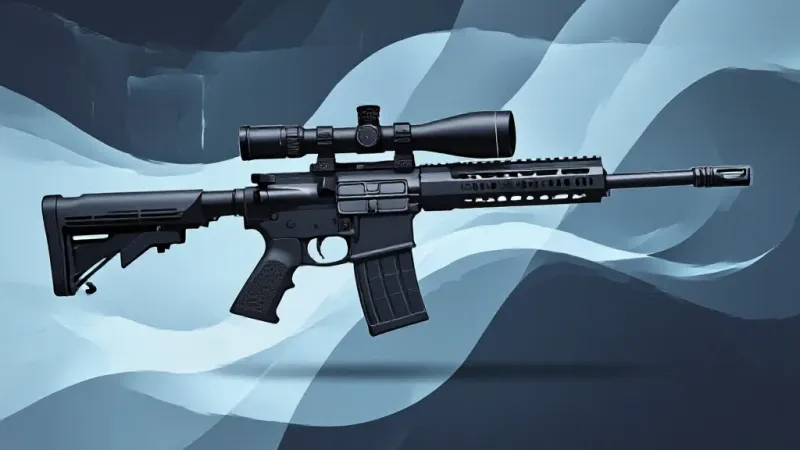
Production of the current-generation centrefire Ruger Precision Rifle (RPR) is slated to end following final manufacturing runs through the remainder of 2026. This significant news for the precision shooting community comes as part of Ruger's wider restructuring under its stated 2030 strategy, affecting several product families.
Abbey Clary, Ruger's director of media, advertising, and public relations, confirmed these changes to American Rifleman, noting that the RPR is among the models scheduled for these final runs rather than an immediate halt. Clary also indicated that this decision does not necessarily mean these product families are permanently discontinued, suggesting some could return in new forms. However, Ruger has not provided any specific product plans or timelines for reintroduction, and there is no confirmed replacement RPR at this time.
It is important to note that the Ruger Precision Rimfire, despite sharing the 'Precision' name, is a separate product and is not affected by this decision. Its production is listed as continuing into 2027, and the news regarding the centrefire RPR should not be misinterpreted as affecting both platforms.
Introduced in 2015, the Ruger Precision Rifle quickly gained prominence, helping to democratize the factory chassis-rifle concept for a broader audience. Its appeal stemmed from offering a purpose-built chassis-style rifle with an adjustable shooting position directly from the factory, an approach distinct from conventional sporting rifles requiring separate stock or chassis conversions. This cohesive integration of stock, magazine arrangement, and overall ergonomics was a key factor in its widespread recognition and discussion within the sport.
The timing of this production announcement is notable, as Ruger had recently announced a substantial refresh on December 19, 2024. Developed with input from competitive shooters, including Team Ruger’s Doug Koenig, the updated rifle featured a more adjustable buttstock, an integral ARCA rail beneath the handguard, and a black DLC-coated bolt. Standard rifles also received a heavy-contour, cold hammer-forged barrel, a revised muzzle brake, and a Magpul MOE-K2 grip. Ruger further introduced Custom Shop versions, which included a TriggerTech two-stage trigger and additional competition-focused features, representing distinct configurations within the RPR line.
For current owners, this production decision does not alter the performance or capabilities of an existing rifle. Similarly, the announcement alone should not be taken as an immediate cessation of servicing or parts support; specific inquiries regarding support should be directed to Ruger or its distributors. Furthermore, there is no basis for assuming that all RPRs will suddenly become collectible. Factors such as condition, specific configuration, and local market demand will continue to determine any potential value.
The Ruger Precision Rifle has undeniably carved out a significant place in the narrative of modern factory precision rifles. Whether Ruger ultimately reintroduces a product under that name remains an open question, representing a future possibility rather than a confirmed next chapter in its history.