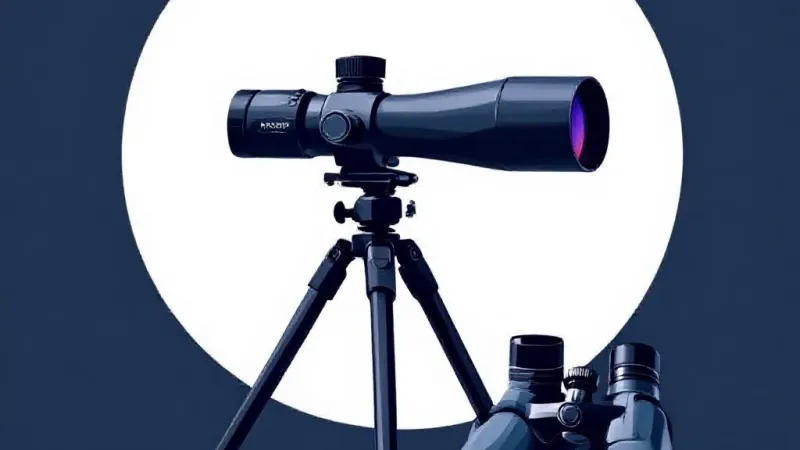
For competitors in PRS and NRL, effective long-range observation is as critical as trigger discipline. The choice between binoculars and a spotting scope for target detection and shot correction often comes down to the specific observational need for a given stage or training session. Both have distinct advantages, but a stable view is paramount regardless of the optic chosen.
Binoculars excel when extensive periods of observation or a broader view of the range are required. Their two-eyed design generally offers a more comfortable viewing experience over extended durations, making them well-suited for taking in an entire scene rather than focusing on a singular, small area. Magnification, such as that offered by a 10x42 binocular like the Maven B1.2 10x42, can be an excellent starting point for general observation. Higher-powered binoculars occupy a different position in this comparison, influencing the choice between one-eyed or two-eyed viewing.
Conversely, a spotting scope becomes the preferred tool when the primary objective is a magnified, detailed examination of distant targets. Many models feature zoom capabilities, allowing the user to trade a wider field of view for a larger image. This increased magnification, exemplified by compact options such as the Maven CS.1A 15-45x 65mm spotter, is invaluable for discerning fine details. However, the benefits of higher magnification come with the necessity of a suitable tripod and head, adding to the overall carry weight. When considering a setup like the CS.1A, comparing its complete carrying solution, including the case, tripod, and head, against that of a larger 80mm model, is crucial, especially if frequent movement from a vehicle to a viewing position is anticipated.
Simply choosing the highest magnification within budget is often less useful than understanding the specific viewing requirements. Environmental factors significantly impact what can be resolved, irrespective of optical power. Heat shimmer, atmospheric haze, lighting conditions, and contrast all affect the clarity of an image. Therefore, a larger apparent image does not automatically equate to more informative detail. This underscores the need for caution regarding claims that a particular magnification guarantees visible bullet holes at a fixed distance, as this overlooks the variability of conditions and target backgrounds. The key is to consider the level of detail required, whether it's reading a large number or making out a small mark on a target. Reliance on generalized statements like an optic being “good to 1,000 yards” is insufficient; understanding what was actually visible, under what conditions, and with what support, provides a more practical assessment.
Personal comfort is also a critical, often overlooked factor. Features like eyecup shape, adequate eye relief, and the ability of binocular barrels to adjust comfortably to a shooter's eyes can override impressive technical specifications. Shooters should test optics while wearing their actual prescription or ballistic glasses. An optic that feels superb for a brief moment in a shop may prove awkward during prolonged use. Before investing in new optics, evaluating whether an unsteady view is the root problem is essential. Budgeting for a complete setup—including a tripod adapter for binoculars or a robust plate and head for a spotter—provides a more realistic cost assessment than merely comparing the optics themselves.
For shooters acquiring their first observation optic, starting with binoculars is often recommended due to their comfort and versatility, unless the primary need is overwhelmingly for greater magnification. For those already equipped with quality binoculars, adding a spotting scope becomes advisable when consistently requiring more detail than existing optics can resolve. When pursuing compact spotting scope options, such as the CS.1A, ColdBore advises examining the optic through Maven USA or Maven AU, carefully noting the currency, included accessories, and local support, while always integrating a suitable tripod and head into the total budget.