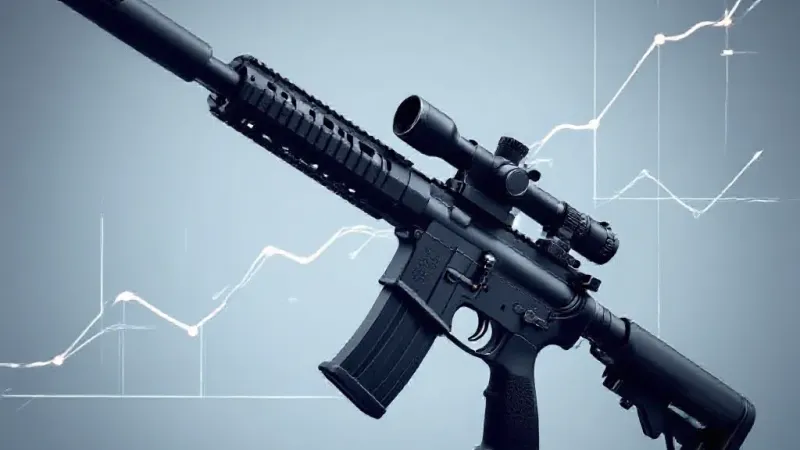
The perennial debate surrounding the impact of rifle suppressors on muzzle velocity (MV) has seen various theories emerge, from claims of no effect to assertions that suppressors consistently increase MV, effectively lengthening the barrel. For competitive precision shooters, where consistent MV is paramount for accurate ballistic solutions and truing data, clarifying this variable is critical. According to recent reporting from rifleshooter.com, which has been rigorously gathering data on this topic, the overall conclusion points to a negligible effect.
rifleshooter.com has undertaken an ongoing data collection effort, utilizing identical ammunition loads in the same rifles, both with and without a suppressor, to ascertain any meaningful conclusions regarding MV shifts. Their initial findings, while part of a broader, continuous process, offer valuable insight for those building DOPE cards and refining their long-range systems.
One specific test detailed involved a Ruger Precision Rifle chambered in 6.5 Creedmoor. This setup compared five distinct 142 gr SMK loads, fired through the rifle both bare and equipped with a Q LLC suppressor. The results from this particular test were mixed: three of the five loads exhibited a higher muzzle velocity when fired from the non-suppressed rifle, while the remaining two loads showed a higher MV when the Q LLC suppressor was attached. This nuanced outcome in a controlled environment underscores the variability that can be observed at the individual load level.
Further data from rifleshooter.com, focusing on a Lithgow rifle also paired with a Q can, similarly indicated mixed results. With some ammunition types, a slight advantage in muzzle velocity was observed when the suppressor was in use. However, these minor fluctuations did not present a consistent, across-the-board increase.
In summing up their experience thus far, rifleshooter.com concludes that, in their view, suppressors exert a negligible effect on muzzle velocity. This suggests that while minor variations may occur with specific load and suppressor combinations, the overarching impact is not significant enough to fundamentally alter a shooter's ballistic calculations or demand wholesale adjustments to established MV data. Competitive shooters, always striving for maximum consistency and precision, can take these findings into account as they optimize their rifle systems and prepare for the demanding conditions of PRS and NRL stages.