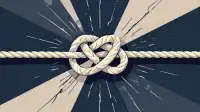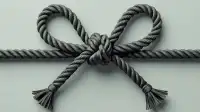
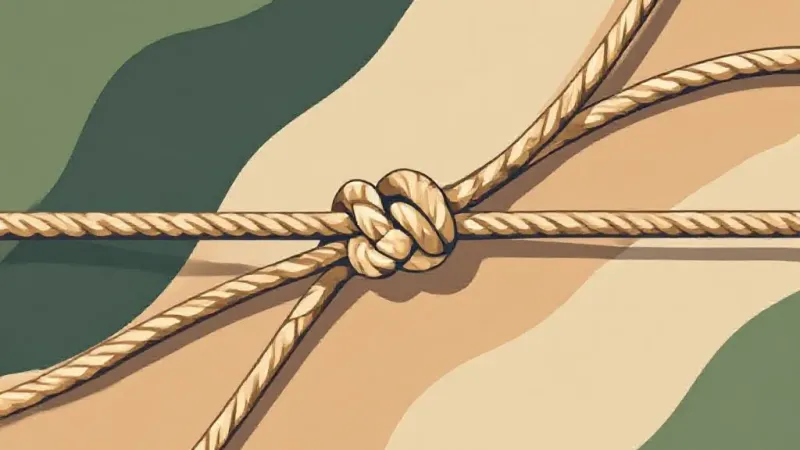
According to a recent report by www.outdoorlife.com, the bowline knot stands as one of history's most enduring and effective tools for the outdoorsman. An ancient knot whose origins predate historical pinpointing, its utility remains as paramount today as it was for mariners, farmers, warriors, and hunters across millennia. Many experts consider it the most useful knot ever created, underscoring its essential role for anyone who spends significant time in the outdoors, where its need is almost a guaranteed certainty for tasks both minor and major.
The bowline's design is deceptively simple yet highly effective: a loop knot that can be tied rapidly, often in mere seconds. While suitable for cord, line, or string of any diameter, it was originally conceived for thicker ropes. Its critical advantage lies in its reliable security; when properly executed, it will not slip under heavy strain. Yet, remarkably, even after sustaining high tension, the bowline can be easily undone. Furthermore, its versatility allows for the creation of a loop of any desired size, rendering its applications practically innumerable. For instance, the report highlights its use in quickly securing a boat to a dock without cleats, extracting a stuck ATV from mud, or aiding in the recovery of a partner from a ravine. The underlying value is the ability to form a trustworthy loop capable of bearing substantial loads.
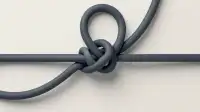
A fundamental property of the bowline is its inherent self-tightening characteristic. Unlike knots that demand maximum manual cinching, the bowline gains security proportionally with the force applied to it. This means that under dynamic loads, such as a boat being buffeted by wind, the knot effectively tightens further, enhancing its hold rather than loosening. The process for tying a bowline involves creating an initial small loop. The tag end is then passed through this initial loop, directed behind the main line, and subsequently re-entered through the small loop, ultimately positioned within the larger primary loop being formed. The knot is then finalized by firmly pulling the main line away while simultaneously holding the tag end and the small loop. This knot can also be adapted to be tied directly around an object by integrating it into the initial loop formation.
Untying the bowline is equally straightforward, typically achieved by turning the knot over and pushing the mainline back into the knot, which loosens it for quick release of the tag end. With fewer than ten minutes of focused practice, an individual can master the bowline, capable of tying it without visual aid. For those seeking even faster deployment, particularly under challenging conditions, variations exist, such as the 'flying bowline' technique favored by sailors for its lightning-speed execution.