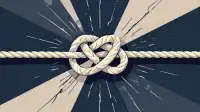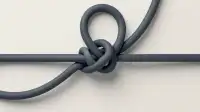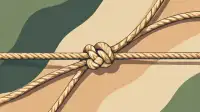
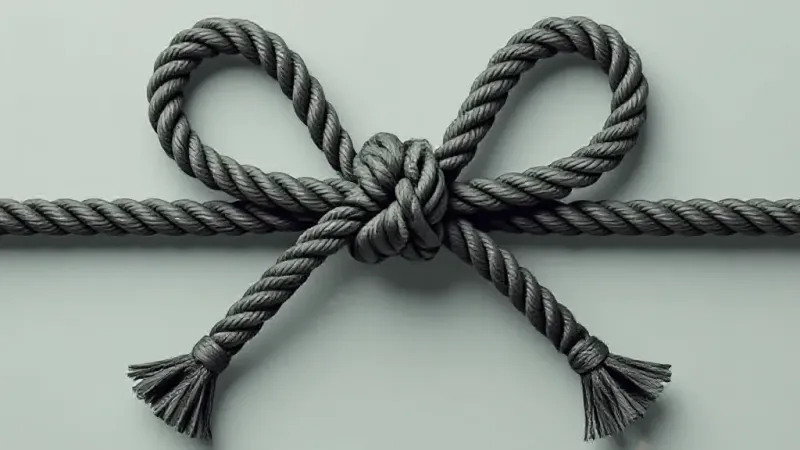
The bowline stands as one of history's most pivotal knots, its origins so deeply rooted in antiquity that its initial proponent remains unknown. Yet, its practical utility resonates as strongly today for outdoorsmen as it did for mariners, farmers, warriors, and hunters millennia ago, underscoring why it’s widely regarded as the most useful knot ever created, according to www.outdoorlife.com.
A bowline can be rapidly executed in cordage of any diameter, though it was originally engineered for heavier ropes. As a loop knot, its inherent design ensures it will not slip under heavy strain once correctly tied. Crucially, even after enduring significant tension, it can be easily undone. The ability to form a loop of any desired size further broadens its already extensive practical applications.
The demand for a reliable loop capable of bearing a heavy load is a recurrent theme in demanding outdoor scenarios. Whether swiftly securing a boat to an improvised dock point like a stump in the absence of cleats, extricating a stuck ATV from challenging terrain with a recovery vehicle, or aiding a peer from a precarious position following an unfortunate fall, the bowline provides the necessary security. This fundamental skill, capable of being mastered with less than ten minutes of focused practice, ensures preparedness for a myriad of minor or critical tasks where rope integrity is non-negotiable.
Tying the bowline involves a precise sequence. Begin by forming a small loop. The tag end of the rope is then passed through this initial loop; this action simultaneously confirms the dimensions of the final main loop. Next, guide the tag end behind the main line of the rope, positioned above the initial small loop. Subsequently, pass the tag end back through the small loop, ensuring it exits within the confines of the larger loop being formed. The final step involves firmly pulling the main line away from the knot while simultaneously securing the tag end and small loop.
A critical design characteristic of the bowline is its progressive tightening under load, negating the need for excessive manual cinching. For instance, in a marine application, the knot’s security would paradoxically increase with environmental forces acting on the vessel. Furthermore, the bowline can be tied directly around an object by integrating it into the initial loop formation. Untying is equally straightforward: simply invert the knot and push the mainline back into the structure, releasing the tag end with minimal effort. While this method is standard, advanced sailors employ even swifter techniques, often revered as a mark of proficiency, to execute a bowline with exceptional speed, a skill sometimes referred to as the "flying bowline." The ability to reliably deploy and retrieve this foundational knot remains an indispensable asset, first reported by www.outdoorlife.com.