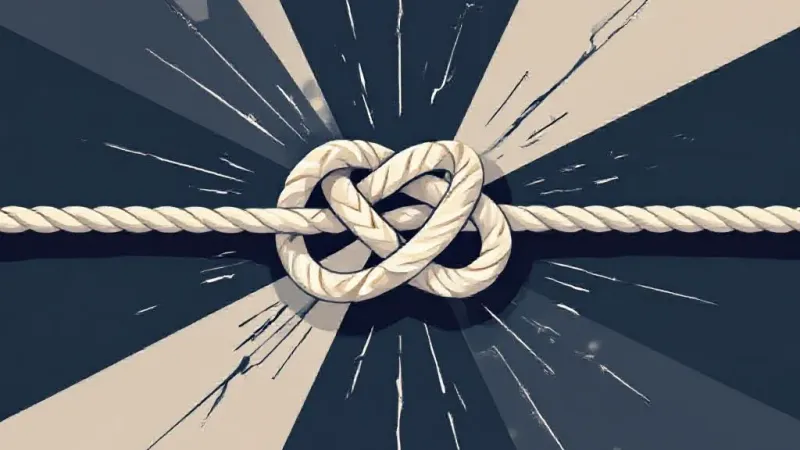
Known historically as the Hercules knot and also referred to as the reef knot, the square knot stands out for its straightforward application and remarkable speed in joining two lengths of rope. It is one of the easiest rope knots to tie, often accomplished in mere seconds. However, its utility is contingent on a critical prerequisite: it must be used to connect two ropes of equal or very similar diameter. A significant disparity in rope thickness, for instance attempting to join a length of paracord with a heavy anchor line, would likely compromise the knot's integrity and lead to failure.
The finished square knot relies on the friction and pressure generated between the two rope pieces for its hold. When executed correctly, it can secure connections effectively. Despite this inherent strength, it is widely considered a "light duty" knot. This classification implies it is not the appropriate choice for life-saving scenarios or situations where it would be subjected to very heavy loads. Instead, its true value lies in what can be termed "low stakes" jobs, where the consequences of a potential slip would not be severe. Examples of such applications include temporarily extending ropes to facilitate dragging a raft up a bank or hoisting a firearm or bow to a treestand.
Tying the square knot is a simple five-step process. Begin by holding the ends of each rope, ensuring a foot or so of tag end extends beyond the point where they will cross. The first movement is to cross the tag end of the rope in your right hand over the rope in your left hand. This initial step can be remembered as "right over left." Next, make a single twist with these tag ends, similar to the start of a basic overhand knot.
The third step involves repeating the initial crossing but in reverse, crossing the left tag end over the top of the right tag end—a "left over right" action. Following this, twist the left tag end over the right tag end once more. To fully cinch the knot, grasp the tag end and running line of each rope in opposing hands and pull them sharply in opposite directions to snug the knot down securely.
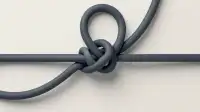
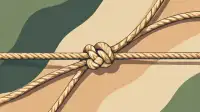
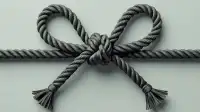
Upon completion, a correctly tied square knot will distinctly resemble two perfectly joined loops of rope. Both the tag end and the running line of each rope should exit cleanly through the loop formed by the opposite rope. Should any tag end emerge from an incorrect position, such as between one of the loops, it signals an error in tying, which will compromise the knot's intended structural integrity. A properly formed square knot is designed to cinch tighter under strain, yet its reliance on pressure alone means it could slip if overloaded. Conversely, its design also allows for effortless untying, even after bearing significant pressure, simply by pushing the knot together from the tag ends and running lines.