The common wisdom circulating among long-range precision shooters often sparks debate regarding the true impact of a suppressor on muzzle velocity. Let's cut directly to the chase: a suppressor absolutely affects muzzle velocity, and in the vast majority of cases, that effect is a measurable increase. This isn't a point of contention among those who meticulously track their DOPE and run extensive chronograph sessions; it's a ballistic reality that demands acknowledgment for accurate long-range engagement.
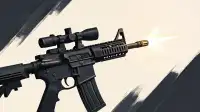
The mechanism behind this velocity bump is rooted in thermodynamics and gas dynamics. As the projectile exits the muzzle, the suppressor acts as a bore obstruction, creating back pressure within the barrel. This increased pressure extends the effective dwell time of the bullet in the bore, allowing the expanding gasses to impart force for a fraction of a millisecond longer. Additionally, the initial gas expansion into the suppressor's blast chamber can create a secondary pressure pulse that further accelerates the projectile as it clears the muzzle, albeit subtly.
While the exact velocity gain is caliber and load-dependent, ranging anywhere from a negligible few feet per second to upwards of 40-50 fps in some setups, it's never truly 'zero.' For competitors running tight SD/ES numbers, this shift is critical. Interestingly, some shooters report that suppressors can even *improve* shot-to-shot velocity consistency, theorizing that the added mass and dampening effect can stabilize barrel harmonics or smooth out gas expulsion dynamics. However, this is highly rifle and load specific and must be rigorously tested.
For the PRS and NRL competitor, ignoring this velocity shift is a recipe for missed steel at distance. Your meticulously trued DOPE card, built on unsuppressed chronograph data, will be fundamentally flawed. A 20 fps increase, seemingly minor, compounds rapidly over 800-1000 yards, translating into a significant vertical miss. Therefore, any time a suppressor is added, removed, or even swapped for a different model, the rifle *must* be re-zeroed and the load re-chronographed. Collect your new velocity data (LabRadar or MagnetoSpeed are invaluable here) and re-true your ballistic solver. Furthermore, be prepared for a potential Point of Impact (POI) shift due to altered barrel harmonics and recoil impulse, necessitating a fresh 100-yard zero confirmation.
The takeaway is clear: while suppressors offer undeniable advantages in recoil mitigation and noise reduction, they are not a neutral attachment regarding ballistics. Precision rifle shooting is a data-driven sport. Rely on your chronograph, verify your zeros, and never assume that your established ballistics will remain unchanged. Integrate your suppressor, then meticulously gather the new data required to maintain your edge on the firing line.