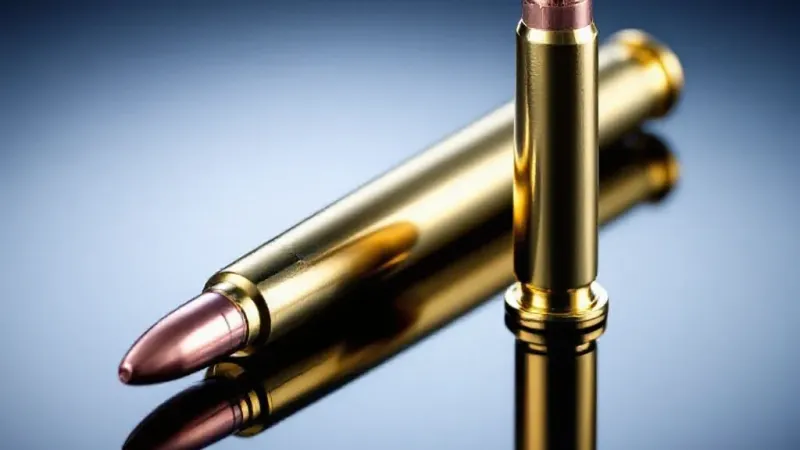
The prevailing wisdom in competitive precision rifle circles has long dictated that handloaded ammunition is an absolute prerequisite for consistent wins, particularly at the PRS and NRL pro levels. The pursuit of single-digit SDs, perfectly concentric rounds, and precisely tuned velocity nodes often leads competitors down the reloading rabbit hole, investing significant time and capital into presses, dies, scales, and components. However, a closer look at the gear lists and performance data from the top echelons of the sport reveals a compelling counter-narrative: factory match ammunition is not just competitive; it’s winning.
Several top-25 PRS shooters are consistently trusting premium factory loads to deliver the precision needed to clean stages and climb leaderboards. This isn't a compromise; it's a calculated decision based on documented performance. Take, for instance, the impressive consistency observed in certain lots of Hornady 6mm ARC 108gr ELD-M or 6.5mm Creedmoor 140gr ELD-M ammunition, routinely yielding sub-0.5 MOA groups at 100 yards and boasting single-digit standard deviations – some lots reporting SDs as low as 4 fps over a 10-shot string. Such velocity consistency is paramount for minimizing vertical dispersion at extended ranges, translating directly to fewer missed impacts due to elevation errors.
Berger Ammunition also stands out with their factory loaded OTM Tactical and Hybrid Match lines in popular calibers like 6mm GT and 6.5 Creedmoor, loaded with their renowned 105gr Hybrid Target or 140gr Hybrid Target bullets. These loads are proving capable of delivering the ballistic coefficient and consistency needed to engage targets effectively out to 1,200 yards and beyond. The shift isn't just about availability; it's about the advancements in factory manufacturing processes, tighter quality control, and the use of premium components (match-grade primers, consistent powder charges, and high-quality brass) that rival, and sometimes even surpass, what many home reloaders can achieve without significant effort.
The cost-effectiveness is also a factor. While premium factory match ammo isn't cheap—often ranging from $1.80 to over $2.50 per round—it eliminates the substantial upfront investment in reloading equipment and the considerable time commitment involved in case prep, powder measuring, and bullet seating. For competitors with limited time or those looking to simplify their match preparation, this value proposition is becoming increasingly attractive. It allows more focus on fundamentals, positional shooting technique, and wind calls, rather than chasing that last 1 fps of SD in the reloading room.
Ultimately, while the pursuit of custom-tuned handloads will always offer the theoretical maximum in performance and tunability for specific rifle systems, the data from the competitive circuit unequivocally demonstrates that modern factory match ammunition provides a level of precision and consistency previously thought exclusive to the most meticulous handloaders. For aspiring competitors or seasoned shooters looking to streamline their process without sacrificing performance, premium factory loads represent a formidable and validated path to the winner's circle.