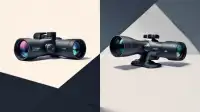
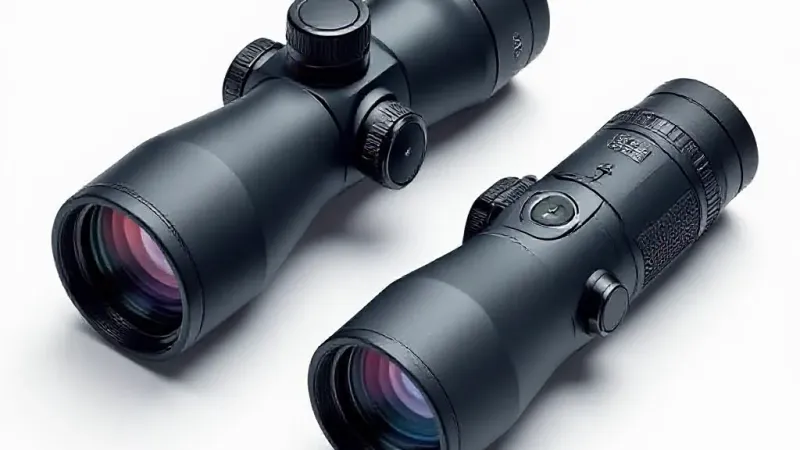
Precision Rifle Series (PRS) and National Rifle League (NRL) competitors consistently evaluate every piece of kit, and the ranging solution is no exception. A fundamental choice for any serious long-range shooter centers on integrated rangefinding binoculars versus a separate, handheld laser rangefinder. Both configurations offer distinct advantages, and the optimal choice often hinges on individual circumstances and priorities.
The primary draw of rangefinding binoculars is convenience. By integrating binoculars and a laser rangefinder into a single unit, a shooter can observe and measure distance without needing to switch devices. This seamless operation can simplify equipment management during a dynamic match day, especially when considering factors like gloves, gear bags, and the rapid acquisition demands of a stage. For those building a kit from the ground up, an integrated option can appear particularly attractive, offering a consolidated solution from the outset.
Conversely, a separate handheld rangefinder allows for greater flexibility and potential cost efficiency, especially for shooters who already own binoculars they are satisfied with. In such cases, adding a suitable handheld rangefinder may represent better value than replacing an entire observation system. This approach also permits a more focused allocation of budget; a shooter might prioritize investment in high-quality binoculars they use every weekend, reserving a specific budget for a rangefinder that might be called upon less frequently. This independence extends to upgrades and repairs. The electronic component can be replaced later without rendering perfectly functional optical glass obsolete. Similarly, if one unit requires servicing, the other remains usable, avoiding a complete loss of capability from the kit.
When evaluating integrated rangefinding binoculars, published assessments of options such as the Vectronix Vector X emphasize that display readability, control layout, and connectivity warrant as much scrutiny as optical magnification. These are the tactile and visual elements a shooter interacts with constantly. Fundamentally, an integrated unit should first excel as a binocular. Critical questions include whether it provides a comfortable full view, if the focus control and eyecups are ergonomic, and if the integrated display remains easy to read. An extensive list of electronic features cannot compensate for an observation optic that becomes tiring to use.
For shooters considering separate rangefinders, models like the Maven RF.1 combine a rangefinder with a compact 7x25 monocular, effectively handling distance measurement while allowing for the selection of full-size binoculars optimized for extended observation. Comparisons of standalone rangefinders, including the Maven RF.1 against units like the CRF.1 and RFZ.1, illustrate the diverse approaches available in dedicated ranging devices.
Regardless of the chosen configuration, several critical features and considerations apply. Bluetooth connectivity, built-in ballistic software, and app integration vary significantly between models. Shooters should compile a precise list of required features and verify that their chosen model supports them. While a clear distance display might suffice for some, compatibility with existing ballistic apps or devices could be a deciding factor for others.
Understanding range specifications is also paramount. It is essential to distinguish maximum reflective range from ratings for other target types, such as trees or deer. Useful range is highly dependent on target surface and environmental conditions, making it crucial to compare ratings that accurately reflect the surfaces a shooter expects to measure in competition.
Long-term ownership considerations extend to warranties, service, and battery logistics. Comparing the warranty terms for electronic components versus optical components, understanding where servicing is available, and assessing battery type and availability are vital for equipment intended for years of use.
Ultimately, the optimal choice for a long-range shooter prioritizes the arrangement that is easiest to carry and use, while also accounting for the future costs and practicalities of servicing or upgrading. Integrated binoculars are often favored when frequent device switching is a notable problem and when the unit functions exceptionally well as a binocular. Separate equipment is typically preferred when good binoculars are already owned, initial expenditure needs careful control, or independent upgrades are desired.