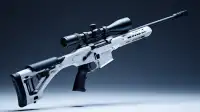
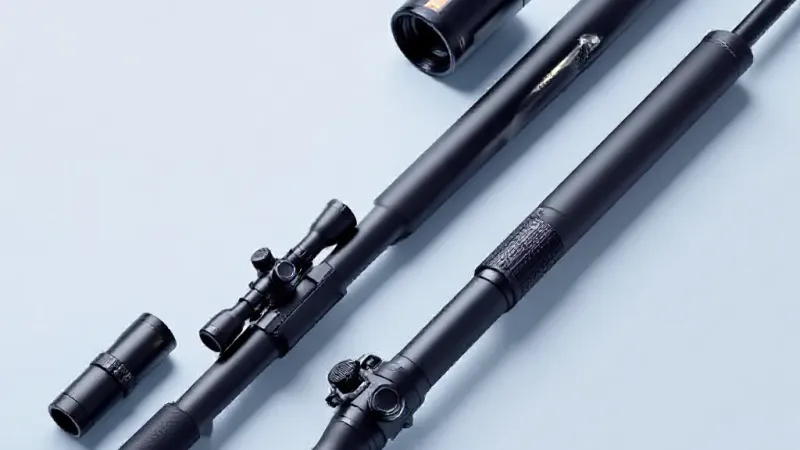
In the competitive landscape of precision rifle shooting, the barrel stands as the undeniable heart of accuracy. While actions serve as delivery systems, a barrel's engineering is paramount for extreme accuracy, consistency, and longevity, whether in PRS/NRL competition, long-range hunting, or tactical scenarios.
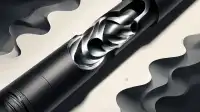
The foundational element of barrel performance is the rifling process—the creation of helical grooves within the bore designed to impart spin on the bullet for stability. This critical manufacturing step varies significantly across methods, influencing production technique, cost, material stress, and ultimately, the barrel's characteristics. Precision barrels across the board prioritize uniformity in bore dimensions, groove depth, and twist rate to minimize bullet deformation and maximize accuracy.
Three primary rifling methods dominate the discussion: cut rifling, button rifling, and cold hammer forging (CHF). Cut and button rifling are widely recognized in custom precision barrel manufacturing due to their capacity for producing exceptionally tight tolerances. In contrast, CHF barrels are more commonly found in mass-produced or military-grade firearms, prized for their inherent durability.
For ultimate accuracy, cut rifling is frequently regarded as superior. Its stress-free process allows for highly exact twist rates, contributing to its dominance in competitive circuits like the Precision Rifle Series. Brands such as Bartlein and Krieger, both known for cut-rifled barrels, are notably prevalent, reportedly used by over 50% of top shooters. These barrels are often the choice for shooters prioritizing maximum accuracy above all else.
Button rifling offers a compelling alternative. With advancements like modern vacuum stress relieving techniques, button-rifled barrels have significantly narrowed the accuracy gap with cut-rifled options. Brands like Lilja and Shilen demonstrate this, providing comparable performance, often at a more accessible cost. For shooters seeking an excellent balance of precision and value, button-rifled barrels present a strong case.
Cold hammer forging, while less common in dedicated custom precision builds due to potential inconsistencies, excels in durability. CHF barrels are underrepresented in the purest precision rifle builds but notably shine in robust factory rifles from manufacturers like Tikka or Ruger, where enduring performance and lifespan are key considerations. They are the choice for endurance and hard use.
Regardless of the core rifling method, variations like 5R rifling, which features sloped lands designed to reduce bullet deformation, are available. While applicable to any method, 5R rifling is particularly popular in both cut and button barrels. Many industry leaders in custom and match-grade barrels offer diverse options, including four-groove, 5R, or six-groove profiles, and some specialize in stainless-steel or carbon-wrapped designs tailored for weight reduction.
Beyond traditional steel, carbon-fiber barrels represent a significant evolution in barrel technology, exemplified by manufacturers like Proof Research. These hybrid barrels feature a stainless-steel inner liner encased in an outer wrap of high-strength, aerospace-grade carbon fiber impregnated with a proprietary resin. This construction directly addresses some of the inherent limitations of all-steel barrels, balancing enhanced performance with specific application advantages.
Carbon-fiber barrels are designed to deliver lightweight, heat-resistant, and accurate performance, making them a premium choice for shooters who prioritize mobility and consistent precision. While they do come at a higher cost compared to traditional steel, their versatility is valued across both professional and recreational shooting. Regarding common online discussions about these barrels, a perspective held by some in the industry suggests that the perceived phenomenon of 'walking' is often attributable to mirage generated by barrel heat, rather than an inherent instability of the barrel itself.
Ultimately, the selection of a precision rifle barrel—whether based on rifling method or material—hinges on a shooter's individual priorities: maximum accuracy, overall value, or long-term endurance. Understanding these distinctions is crucial for building a rifle optimized for specific competitive or field demands.