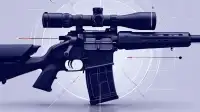
The pursuit of fractional-MOA accuracy in competitive precision rifle shooting often drives competitors to evaluate every component of their system. While the action, trigger, and optic rightfully receive significant attention, the barrel remains the ultimate arbiter of projectile flight. Among the critical modifications, barrel length optimization and the integrity of the muzzle crown stand out as often-debated, yet unequivocally crucial, factors for PRS and NRL competitors seeking an edge. This isn't merely about aesthetics; it's about physics and repeatable precision under duress.
The trend towards shorter barrels, typically in the 20-24 inch range for cartridges like the 6 Dasher or 6GT, is a direct response to the demands of dynamic stage design. Reduced length translates to enhanced maneuverability on complex barricades and tighter shooting positions, mitigating snags and improving balance. However, this often comes at the cost of muzzle velocity, potentially impacting transonic stability at extreme ranges and demanding more precise wind calls due to increased flight time. Competitors must rigorously test their chosen length, truing their DOPE and verifying ballistic coefficients to account for these changes, particularly how a shorter barrel might shift preferred velocity nodes for optimal harmonics.
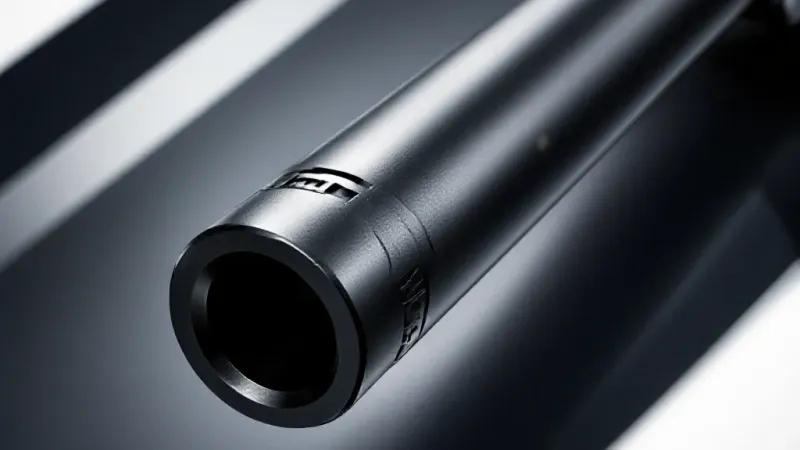
Beyond overall length, the muzzle crown is arguably the single most critical interface for projectile departure. A perfectly concentric, burr-free crown ensures uniform gas escape around the bullet's base as it exits the barrel. Any imperfection—a ding, an uneven cut, or an improperly relieved edge—can cause asymmetric gas pressure, inducing yaw and drastically opening up groups, turning a guaranteed hit into a miss at distance. This is why professional gunsmithing is non-negotiable for any barrel work; a rudimentary chop and re-crown can introduce more problems than it solves, regardless of how stable your handloads or how consistent your SD/ES numbers are.
Common precision crown types include the 11-degree target crown or the more protected recessed target crown. Both aim to safeguard the rifling and ensure a clean, unobstructed exit. When considering a barrel modification, understanding the impact on density altitude calculations, spin drift, and Coriolis effect becomes secondary if the bullet isn't leaving the muzzle consistently. Competitors routinely re-crown barrels after extensive use or accidental damage, recognizing that even a microscopic imperfection can negate hours of dry-fire practice and meticulous stage planning. The barrel's integrity, from chamber to crown, is the bedrock of consistent cold bore shots and match-winning performance.