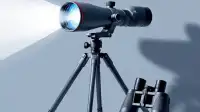
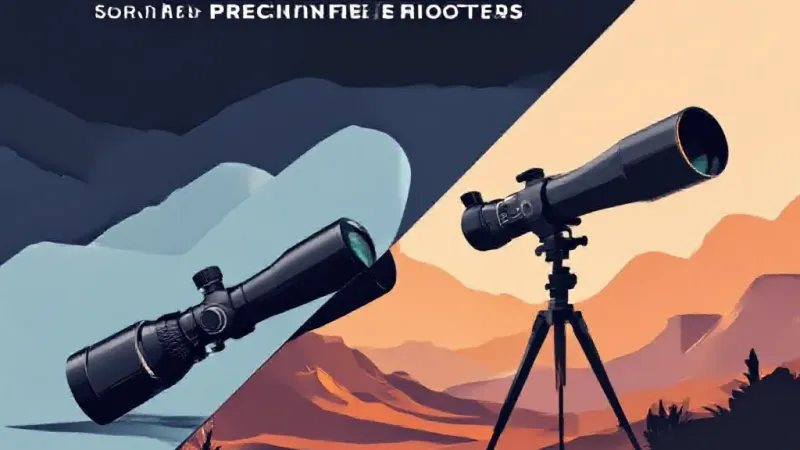
The decision between an angled and a straight spotting scope for range use hinges primarily on your intended viewing position. While both designs aim to provide clear observation, their fundamental difference—the eyepiece angle—dictates how you interact with the optic, a critical factor for long-duration use in precision rifle shooting. An angled eyepiece directs your gaze downwards into the scope, whereas a straight body design positions your eye directly in line with the scope’s optical path, looking straight ahead. The most comfortable and practical option will depend significantly on whether you are seated, your preferred tripod height, and if the scope will be shared among multiple users.
For shooters who anticipate spending extensive periods seated, perhaps while observing impacts, coaching squadmates, or during extended stage downtime, an angled spotting scope often presents a more ergonomic solution. This design allows for a lower tripod setting, as the user looks down into the eyepiece, reducing the need to crane the neck or shoulders. This can be particularly beneficial over multiple stages or full match days. Additionally, an angled model simplifies shared viewing among individuals of varying heights. Without needing to constantly adjust tripod height, multiple users can comfortably observe through the scope by simply adjusting their own posture or position relative to the eyepiece. Vortex also highlights these benefits, specifically citing sharing and seated observation as key reasons to consider an angled design. Many angled scopes also incorporate a rotating collar, which provides an additional layer of adjustment by allowing the eyepiece to be repositioned around the scope body, further customizing the viewing angle. When evaluating a full-size angled model, such as the Maven S1.2A, it is crucial to verify that the focus control can be reached comfortably while maintaining your viewing position. The placement of controls is as vital as the eyepiece angle itself.
Conversely, a straight spotting scope positions the user directly behind the body, looking forward. This orientation can feel more intuitive for shooters accustomed to transitioning between binoculars and a spotter, offering a seamless eye-to-target alignment. For those who simply find the direct forward gaze more comfortable, a straight model is a compelling choice. Beyond ergonomics, the straight body might also offer practical advantages in transport. While overall length and eyepiece size remain important, a straight scope may, in some configurations, fit more neatly within specific gear bags or cases. Comparing the actual dimensions of the scope, including covers and accessories, against available case space is advisable.
It is critical to understand that the choice of body style does not inherently dictate optical performance. Kowa’s explanation of the two designs makes a useful distinction: corresponding straight and angled versions of the same scope generally offer equivalent optical performance. Shooters should not assume that an angled eyepiece provides superior resolution or that a straight one is inherently brighter. To make a truly fair comparison of body styles, one should endeavor to test equivalent models where possible. Contrasting a compact straight spotter with a large angled model, for instance, introduces variables such as objective size, eyepiece design, and overall optical quality, making it difficult to isolate the comfort benefits of the eyepiece angle alone.
The most effective way to determine which body style suits your needs is through a realistic shop trial. Simulate your typical range viewing position: use a chair if that is how you expect to spend your range days. Wear your usual shooting glasses and commit to more than a brief glance behind the eyepiece. Pay close attention to your body mechanics—notice any tendency to raise your shoulders, bend awkwardly, or struggle to maintain a full, clear image. If the scope will be a shared resource, have someone of a different height try it as well. Observe how much adjustment is required and confirm that the tripod remains stable at the necessary heights. A viewing position that is comfortable and easily repeatable throughout a long match day will ultimately prove more beneficial than a fleeting, awkward look through the glass. Ultimately, the best practice is to prioritize the comfortable body style first, then select the glass and accessories that align with your budget and performance requirements.