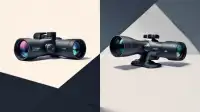
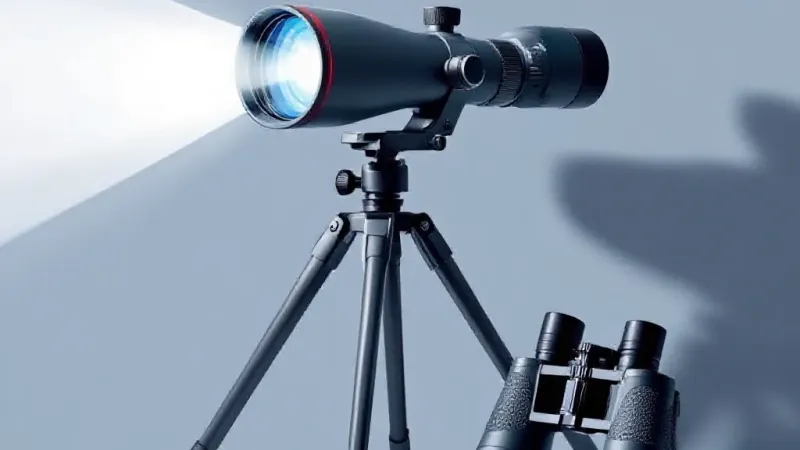
For competitive long-range precision rifle shooters, choosing the right observation optic is a critical decision, influencing everything from stage planning to shot correction. Binoculars and spotting scopes each serve distinct purposes on the range, and understanding their respective strengths is more valuable than simply pursuing the highest magnification available.
Binoculars are particularly well-suited for extended periods of observation and provide a comfortable two-eyed viewing experience. They commonly offer a broader field of view compared to high-power spotting scopes, making them ideal for taking in the entire range scene rather than focusing on a single, small area. Nikon's comparison of the two formats distinguishes between mobile observation and detailed viewing from a fixed position, aligning with the versatility binoculars offer for general situational awareness.
Conversely, a spotting scope excels when the primary need is to examine distant details with high magnification. Many models feature zoom capabilities, allowing a shooter to trade a wider view for a significantly larger image. While this provides enhanced magnification for precise observation, it typically comes with a reduced field of view and necessitates the added consideration of a suitable tripod and head to ensure a steady platform. For instance, the Maven CS.1A offers 15-45x magnification in a compact 65mm spotter, designed for detailed viewing.
However, the utility of any observation optic extends far beyond its raw magnification specifications. A steady view is as crucial as the optic itself. Whether using binoculars with a tripod adapter or a spotting scope with a dedicated plate and head, a stable platform is paramount for resolving detail at distance. When budgeting, it is essential to consider the complete setup, including the tripod, head, and any carrying solutions, rather than just the optic itself. The weight and bulk of a full setup, such as a larger 80mm spotter compared to a compact 65mm model, can be a significant factor if one frequently walks a considerable distance to a viewing position.
Personal comfort is another often-overlooked aspect. Factors like eyecup shape, eye relief, and how comfortably the barrels adjust to the user's eyes can significantly impact extended viewing sessions. It is advisable to try optics while wearing any corrective lenses that would typically be used on the range, as a brief in-store impression may not accurately reflect long-term comfort.
Furthermore, the ability to resolve detail is not solely a function of magnification. Environmental factors such as heat shimmer, haze, available light, and target contrast profoundly affect image clarity. A larger image does not automatically equate to more usable information. Therefore, caution is warranted regarding any claims that a specific magnification guarantees visible bullet holes at a fixed distance, as these assertions often fail to account for the variable conditions encountered in the field. What can be seen—and under what specific conditions and with what level of support—should always be the determining factor when evaluating an optic's practical utility.
For those building their observation kit, a foundational approach is often beneficial. If greater magnification is not the absolute primary concern, starting with a quality pair of binoculars, like the Maven B1.2 10x42 for general observation, can offer excellent comfort and versatility. A dedicated spotting scope can then be added to the kit when the need to resolve finer detail consistently exceeds the capabilities of the binoculars. When considering a compact spotter, such as the Maven CS.1A, it is prudent to compare factors like included accessories, local support, and currency, alongside ensuring a suitable tripod and head are integrated into the total budget.