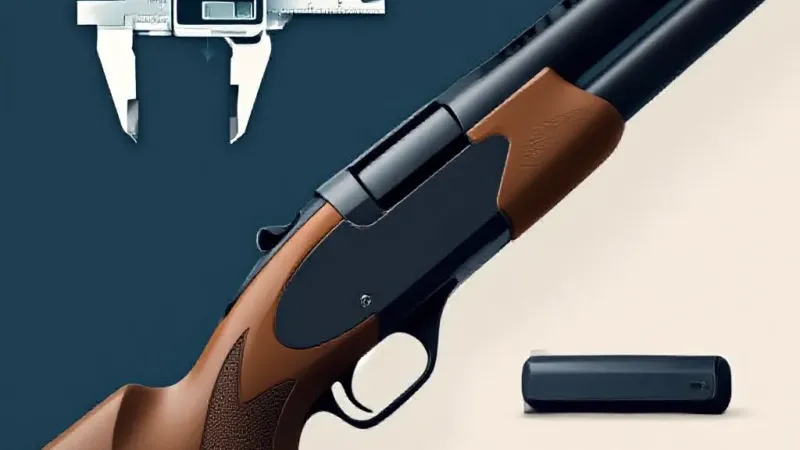
Old rifles and shotguns frequently exhibit signs of age in their components, particularly with cracked or broken recoil pads and butt plates. These degraded components not only diminish shooter comfort by increasing felt recoil but can also negatively impact consistent shouldering and shot placement. A recent article from rifleshooter.com provides a detailed account of replacing an old plastic recoil plate on a side-by-side shotgun with a modern rubber recoil pad, characterizing the conversion as a process that, while seemingly straightforward, demands specialized tools and meticulous execution.
The core of this upgrade involves a dedicated grinding fixture designed to mount onto a belt grinder, crucial for shaping the new pad to the stock's exact dimensions. Rifleshooter.com prefaces the discussion with a critical disclaimer: the content is intended purely for informational purposes, and all modifications to firearms should exclusively be performed by competent, licensed gunsmiths. They explicitly state that undertaking such tasks without professional expertise carries significant risks, including the potential to void warranties, render the firearm unsafe, cause malfunctions, and lead to personal injury or even death. This robust caution underscores the precision and inherent danger involved in firearm modifications.
For this specific project, the necessary components were procured from Brownells. The target for replacement was an original, aged plastic recoil plate, which had been secured to the shotgun stock using two screws. The chosen replacement, a rubber recoil pad manufactured by Pachmayr, was selected due to its direct compatibility, featuring screw holes that aligned precisely with the existing mounting points on the stock.
The installation sequence begins with the attachment of the new Pachmayr recoil pad to the shotgun stock using the provided screws. Once the pad is firmly in place, both the stock and the newly affixed pad are secured in a rubber-jawed vise to prevent movement. A marking knife is then carefully used to trace the precise outline of the stock onto the new rubber pad. To make this traced line distinct and visible for the subsequent grinding phase, chalk dust is filed and rubbed over the pad, effectively filling the outline.
The prepared pad is then detached from the stock and secured onto the specialized grinding fixture. This fixture is designed for adjustability; its front piece is secured with a screw, allowing the top of the fixture and the butt plate angle to be meticulously adjusted to match the stock's profile perfectly. With the pad correctly mounted on the fixture, the assembly is then positioned on the belt grinder. The grinding operation is executed with the objective of "splitting the line" — precisely cutting to the center of the chalk outline — to ensure an impeccably precise fit. Rifleshooter.com notes that utilizing more coarse grit belts during this grinding phase yields superior results, as they cut more cleanly and rapidly compared to finer belts, which have a tendency to melt the rubber material. The article concludes by acknowledging that fitting new recoil pads requires skill that, like many precision tasks, becomes more refined and easier with dedicated practice.