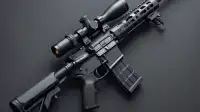

The Ruger Mini-14, a carbine ingrained in popular culture, typically isn't the first rifle that comes to mind when discussing precision shooting. Its reputation, while solid for reliability, has rarely included sub-MOA performance out of the box. However, for the technically inclined shooter, the question remains: what does it take to wring meaningful accuracy out of this platform? Can we apply precision rifle principles to a rifle built for other priorities?
The primary hurdle for consistent accuracy in a factory Mini-14 lies in its thin, tapered barrel, which is directly connected to the gas block. This design leads to significant point of impact (POI) shift as the barrel heats up, making consistent grouping a challenge. Addressing barrel harmonics and rigidity is paramount. Aftermarket barrel stabilizers, such as the Accu-Strut or Mo-Rod, effectively increase the barrel's stiffness and damp vibrations, often reducing group sizes measurably by mitigating barrel whip. For truly dedicated efforts, a heavier profile barrel conversion, while not as straightforward as an AR platform, is the ultimate route for thermal stability, although it fundamentally alters the rifle's character.
Another critical component for any precision endeavor is the trigger. The factory Mini-14 trigger is notoriously heavy and often vague. Upgrading to a custom trigger job or installing an improved aftermarket trigger group from specialists can yield a crisp, predictable break, significantly enhancing the shooter's ability to call shots accurately. Reducing a 6-7 lb pull to a clean 3.5-4 lb pull is transformative.
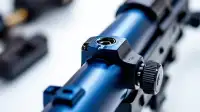
Optics mounting presents its own unique challenges on the Mini-14, largely due to its top-ejecting action. A stable, repeatable scope mounting solution is non-negotiable for precision. Robust Picatinny rail systems that bolt securely to the receiver, minimizing cantilever, are essential. Products from Warne or Basset Machine offer superior rigidity compared to factory rings, ensuring that zero is maintained and adjustments track true. A consistent cheek weld, often improved by aftermarket stocks or adjustable risers, is also crucial for maximizing glass utility.
Further enhancements include bedding the action into a more rigid stock system. Many factory Mini-14 stocks allow for too much play, which can introduce inconsistencies. Aftermarket synthetic or laminate stocks can provide a more stable platform, reducing action movement during the firing sequence. While not a custom bolt action's full-length bedding, even partial improvements can tighten groups.
Finally, and perhaps most importantly for the ColdBore readership, is ammunition truing and handloading. The Mini-14, like any rifle, benefits immensely from meticulously developed loads. Focusing on finding a stable velocity node that minimizes the effects of barrel whip and utilizing high-quality projectiles tailored to the rifle's barrel twist rate are critical. Experimenting with powder charges, seating depth, and consistent neck tension will yield the tightest extreme spreads (ES) and standard deviations (SD) possible for the platform, even if these figures won't match a custom benchrest rifle. While a Mini-14 may never be a competition-grade PRS rifle, applying these precision principles can transform it from a 3 MOA carbine into a consistent 1.5-2 MOA shooter, a testament to what thoughtful optimization can achieve even with inherent design limitations.