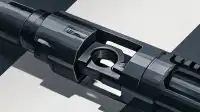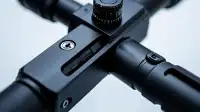

Drawing inspiration from the Ruger Mini-14 rifles featured in the popular 1980s television series, a recent customization project outlined the intricate steps involved in transforming a standard Mini-14 into a modern interpretation of the “Mini-14 GB in blue.” While the original screen-used rifles were stainless with flash hiders, sometimes confused with the fully automatic Ruger AC556, the project focused on achieving a similar aesthetic with a blued finish.
The genesis of the project stemmed from a customer's Mini-14, already outfitted with a Samson Manufacturing A-TM folding stock—a modern reproduction of Ruger's discontinued original—along with a flash hider and a bayonet lug-equipped front sight. This provided the blueprint for the build, aiming to replicate the distinctive look while adapting the finish.
The initial and most challenging step involved the removal of the factory front sight. Described as being pressed on, pinned, and further secured by the bluing process, which can introduce rust, it proved resistant to penetrating oil and vice pressure. Ultimately, machining was required, performed on a milling machine with a 1/2-inch, 4-flute end mill running at approximately 800 RPM, to remove enough material for the sight to slide off.
With the front sight cleared, the barrel was prepared for threading. This critical operation was executed on a Precision Matthews PM-1440 GT lathe, using a four-jaw chuck. To protect the receiver and ensure stability without risking damage during the process, 10 mil tape was applied to the receiver, and a crown saver was utilized in the tailstock. The shoulder where the original front sight sat was precisely threaded to 1/2″-28, a common pitch for muzzle devices.
Installation of the new front sight assembly and flash hider followed. Meticulous alignment was crucial, with the receiver leveled in the milling machine's vise and the barrel's center precisely located. A bayonet was employed as a physical reference to ensure the new front sight's perfect positioning. A spring-loaded tap guide in the mill allowed for perpendicular adjustment of the front sight to the bore. The sight block was secured with green Loctite and allowed to set overnight. The final mechanical securing involved cross-drilling the front sight for a roll pin, a task performed with an angle block stabilizing the muzzle, followed by tapping the roll pin into place.
This detailed customization highlights the precision gunsmithing necessary to achieve a specific aesthetic, blending nostalgic inspiration with modern machining techniques for a distinct rifle build.