
The Desert Scorpion Classic, held last weekend at the remote Diablo Flats range outside Tucson, Arizona, saw veteran competitor Mark Smith emerge victorious, navigating brutal, unpredictable wind shifts that plagued the 18-stage match. Smith's commanding performance, characterized by consistent sub-half-MRAD impacts under pressure, secured his lead despite some of the most challenging conditions seen in the PRS circuit this season.
Competitors faced a significant test of their wind reading capabilities, with gusts ranging from 8 to 20 MPH, frequently switching from a consistent left-to-right push to sudden quartering head and tailwinds within seconds. The high desert elevation, hovering around 4,500 feet ASL, combined with midday temperatures pushing 95°F, generated significant mirage, making holdovers on steel past 800 yards a serious challenge. Density altitude swings demanded diligent truing of ballistics, especially for those running faster 6mm platforms.
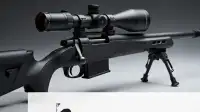
Smith ran his proven setup: a custom Bighorn Origin action chambered in 6 Dasher, fed by Lapua brass and 108gr ELD-M bullets at a consistent 2920 FPS (SD < 5 FPS). His rifle, built into an MPA Comp Chassis and topped with a Nightforce ATACR 7-35x56 with the Mil-XT reticle, proved its mettle. Smith attributed much of his success to meticulous wind calls and a disciplined approach to positional shooting. "You couldn't just hold and pray," Smith commented. "It was constant environmental awareness, looking at dust, flags, mirage, and listening to impacts downrange. My DOPE card was trued for the DA, but the wind was the real equalizer."
One notorious stage, "Serpent's Spine," required shooters to engage six targets from 400 to 1100 yards from an unsupported prone position over a rocky ridge line. The targets were staggered, forcing significant rifle cant adjustment and precise elevation changes on the fly. Smith executed this stage with near perfection, dropping only two points due to an aggressive wind call on the furthest target. Another demanding stage, "Desert Dragon," featured a complex barricade sequence engaging three movers at varying distances (300, 500, 700 yards) within a tight 90-second par time. Success here hinged on swift transitions, maintaining a stable bag position, and anticipating mover leads correctly, a testament to Smith's mastery of practical application.
The top finishers universally showcased impeccable data management, precise wind calls, and exceptional positional stability. While several competitors had excellent ballistic solutions, Smith's ability to interpret and react to the constantly changing wind picture separated him from the field. His consistent cold bore impacts across multiple stages underscored his rifle's precision and his pre-match preparation. This match served as a stark reminder: velocity nodes and BC are critical, but mastering the environment remains the ultimate arbiter of success in competitive precision rifle shooting.