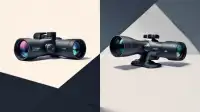
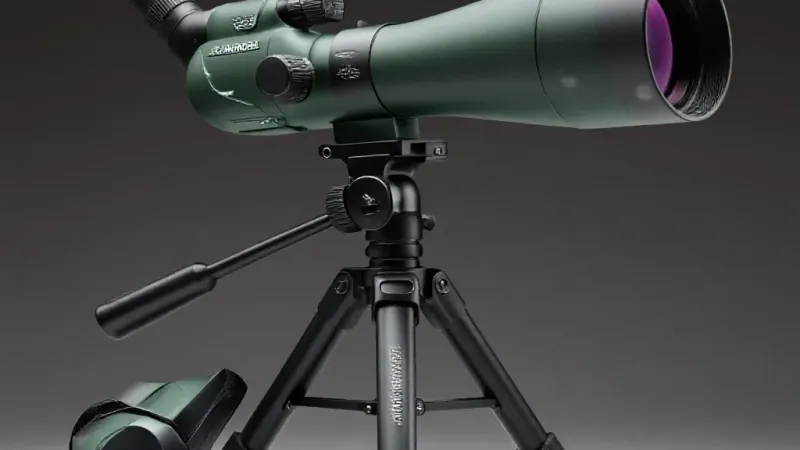
A quality spotting scope can become a source of frustration if paired with an ill-suited tripod head, hindering efficient observation during competitive stages or practice. The fundamental distinction between a ball head and a pan head lies in their movement mechanisms: one offers fluid, multi-directional freedom, while the other provides separate, controlled axes for panning and tilting. For a dedicated spotting scope setup, a compact fluid pan-and-tilt head typically serves as an excellent starting point. However, a ball head remains a practical choice when compactness is paramount, the tripod has multiple uses, or an existing one already performs comfortably with the spotter.
Ball heads leverage a ball-and-socket joint, allowing the mounted optic to move freely across multiple axes. This design often results in a compact profile and rapid repositioning capabilities, which can be advantageous in dynamic shooting environments. SmallRig’s comparison of ball and fluid heads clarifies this core difference in movement, though it notes that the quality and control mechanisms vary considerably across individual models. The inherent trade-off with a ball head is the potential for unintended movement, including unwanted sideways tilt, when the main lock is disengaged. Features such as separate panning controls and adjustable friction can significantly mitigate this, making it crucial to evaluate these controls with the spotting scope mounted to assess ease of movement and secure locking. The My Two Vets QDT V2 review, for instance, illustrates a spotting-scope setup utilizing a ball head, emphasizing the importance of considering the complete tripod, head, and optic combination.
In contrast, a pan-and-tilt head provides distinct controls for horizontal panning and vertical tilting. A fluid video head further refines this by incorporating damping, which results in smoother, more controlled movements critical for tracking targets or making fine adjustments. It is important to note that not all pan heads incorporate fluid damping, so shooters should verify the design beyond just the handle shape. The Leofoto BV-10L stands out as an example featuring individual pan and tilt locks, alongside a handle that can be positioned on either side—useful attributes to consider when selecting an observation head across any brand. The primary drawbacks of pan-and-tilt heads are potentially increased weight and a bulkier form factor for transport. Some models offer detachable handles to address the packing challenge, making it essential to confirm how easily the head fits into a carry bag and if controls remain accessible with the spotting scope attached.
Beyond the fundamental design, several factors influence a head's suitability. A published load rating, for example, does not inherently convey how smoothly a head will operate or how effectively it will balance equipment. Weight distribution is a critical element, particularly with longer spotting scopes or when accessories like phone adapters are attached. Manufacturers' guidance should be consulted for the specific configuration intended. Understanding the distinction between drag and counterbalance is also key: drag provides resistance to movement, while counterbalance actively assists in offsetting the scope's weight as it tilts. Not all fluid heads offer the same range of adjustment, and a system designed for heavier camera equipment might not be optimized for a lighter spotting scope, necessitating inquiry about this compatibility before investing in features that cannot be effectively utilized.
Finally, verifying the mounting arrangement before purchase is crucial. Shooters should confirm if the spotting scope’s foot directly fits the head’s clamp or if an additional plate is required, even for equipment described as Arca-compatible. Inquiring with the manufacturer or retailer about clamp adjustment mechanisms and safety stops, and budgeting for any necessary adapters, will prevent potential issues. For those building a new spotting setup, prioritizing smooth pan-and-tilt control and convenient access to locks is advised. Conversely, if an existing ball head already provides smooth operation and securely holds the scope, there is no inherent need for replacement. EuroOptic’s current Leofoto head listings offer a valuable resource for comparing available models, though verifying plate inclusion and shipping availability is recommended. The Maven S1.2A review covers the optic in a related context, offering further insight for those considering new observation equipment.