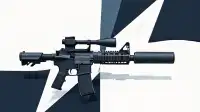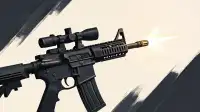
For competitive long-range shooters, every variable impacting ballistic performance demands scrutiny. Among these, the effect of rifle suppressors on muzzle velocity (MV) has long been a subject of debate within the precision rifle community. While some contend that a suppressor can effectively lengthen a barrel and increase MV, others argue for a negligible impact. Preliminary data gathered from an ongoing effort aims to shed light on this crucial topic, suggesting that suppressors have a minimal influence on muzzle velocity.
The initial findings stem from testing conducted on multiple rifle platforms. One set of observations involved a Ruger Precision Rifle chambered in 6.5 Creedmoor. This evaluation compared five distinct 142-grain Sierra MatchKing (SMK) loads, fired both with and without a Q LLC suppressor attached. The results from this specific rifle and ammunition combination presented a mixed picture: for three of the five loads tested, the unsuppressed rifle recorded a higher muzzle velocity. Conversely, for the remaining two loads, the rifle equipped with the Q LLC suppressor exhibited a higher MV. This outcome highlights the nuanced and load-dependent nature of any potential velocity shifts.
Further data was collected using a Lithgow rifle paired with a Q can, another commonly seen suppressor in the precision shooting world. In this instance, the gathered information indicated that with specific ammunition selections, a slight advantage in muzzle velocity was present when the suppressor was attached.
Synthesizing the observations from both the Ruger Precision Rifle and the Lithgow, the overall preliminary conclusion drawn from this data gathering effort is that suppressors exert a largely negligible effect on muzzle velocity. This assessment suggests that while minor fluctuations may occur depending on the specific rifle, load, and suppressor combination, these variations are not consistently substantial enough to align definitively with claims of a significant MV increase or decrease.
For PRS and NRL competitors, this preliminary finding offers valuable context for equipment choices and load development. Maintaining consistent muzzle velocity is paramount for generating accurate DOPE and executing precise wind calls, especially at extended ranges where even minor velocity deviations can impact shot placement. If the effect of a suppressor on MV is indeed negligible, as this data indicates, shooters can primarily focus on their rifle's inherent precision and the consistency of their handloads. Truing ballistic data would then not necessitate distinct velocity nodes for suppressed versus unsuppressed configurations, simplifying the analytical process and potentially streamlining range sessions. This understanding allows competitors to make informed decisions about running a suppressor based on factors like recoil mitigation, sound reduction, and gas blowback, rather than significant ballistic performance changes.