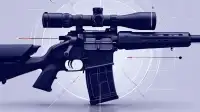

For the competitive shooter, every point of contact between man and machine is a critical interface demanding optimization. While we obsess over trigger pull, scope tracking, and cartridge concentricity, the humble buttstock and its recoil pad often receive less scrutiny than they deserve. This isn't just about comfort; it's a foundational element for consistent recoil management, faster follow-up shots, and unwavering positional stability across demanding PRS and NRL stages.
The primary functions of the buttstock are to establish a consistent Length of Pull (LOP), provide a stable shoulder pocket, and facilitate proper head position for a repeatable cheek weld. Modern precision rifle chassis systems, like those from MPA, MDT, and KRG, offer extensive adjustability for LOP, cant (vertical rotation), and toe (horizontal angle) of the recoil pad. Fine-tuning these parameters ensures the rifle seats consistently in the shoulder, minimizing unwanted movement during the recoil impulse and allowing the shooter to stay on target to spot impacts and call wind. A pad with incorrect cant or toe can push the rifle inconsistently, forcing the shooter to fight the weapon rather than manage it.
Beyond fit, the material and condition of the recoil pad itself play a significant role. A worn, hardened, or cracked pad, common on older platforms, loses its ability to effectively absorb and dissipate recoil energy. Premium pads utilizing advanced rubber compounds or Sorbothane can drastically reduce felt recoil and mitigate muzzle jump, crucial for rapid target engagement. A fresh, properly chosen pad maintains consistent friction against the shoulder, preventing slippage and ensuring the rifle drives straight back, aiding in faster sight picture recovery.
The cumulative effect of a precisely fitted and functional recoil pad is profound. In a multi-stage match, where dozens of rounds are fired from various challenging positions, reduced shooter fatigue is a direct performance enhancer. More importantly, consistent recoil absorption directly correlates to the ability to call impacts at distance, a skill that separates top competitors. When your rifle behaves predictably shot after shot, you can dedicate more cognitive resources to reading conditions and executing the shot, rather than battling recoil. This translates to tighter groups under pressure and quicker engagement of second-round impacts on challenging targets.
Whether you’re custom fitting a grind-to-fit pad onto a traditional stock or making micro-adjustments on a state-of-the-art chassis, understanding and optimizing this interface is paramount. It’s not simply replacing a broken component; it’s an active pursuit of consistency. For those running heavy magnums like a 300 PRC or even high-volume 6mm Dasher rigs, a well-tuned buttstock interface is an absolute necessity for sustaining top-tier performance throughout an entire match.