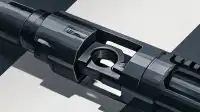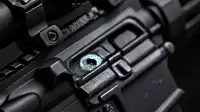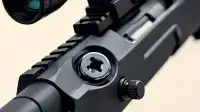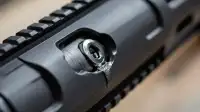
Encountering stripped or sheared screws is a common challenge for competitive shooters and precision rifle builders alike. Despite quality components and proper tooling, fastener failures occur, demanding specialized solutions. This overview details approaches for handling two prevalent issues: the stripped screw and the more demanding sheared screw, referencing methods applied to a Remington 700 Police rifle with such damaged fasteners. As with any rifle modification, these procedures carry risks and are best performed by competent gunsmiths to avoid potential damage or unsafe firearm conditions.
For a stripped screw, where a driver no longer engages the head, initial attempts often involve a larger sized Torx or Allen style bit, tapped into the damaged head. While this can occasionally allow the screw to be backed out, it may also further strip the head. A more reliable next step involves drilling out the screw head itself. This technique requires selecting a drill bit slightly larger in diameter than the screw’s shank. With the rifle action secured in a vise, a cordless drill can be used to carefully cut off the screw head. Once the head separates, the threaded shank typically remains in the action, allowing for its removal by gripping it with locking pliers and backing it out. This method is often effective.
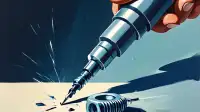
Removing a sheared screw presents a greater challenge, as the fastener breaks flush with the action surface, eliminating any exposed material for pliers. While some instances allow a slot to be cut for a screwdriver, this is often not feasible. The primary method for a flush-sheared screw involves drilling out the remaining body. Precision is paramount; ideally, a milling machine or a quality drill press should be employed, with the action securely held in a v-block. A spotting drill is typically used to ensure centering, followed by progressively larger, undersized drill bits. This slow, incremental drilling aims to remove the screw material. If drilling remains dead center, most of the screw can be extracted. If slightly off-center, one side of the screw may be cut, allowing a small punch to remove the remainder. In some cases, a tap may be necessary to recut any remaining threads.
While damaged fasteners are a frustrating reality in precision rifle work, they are not insurmountable problems. Depending on the specific damage encountered and the tools available, a shooter or builder may resolve the issue independently. However, for complex cases or when specialized equipment unavailable, consulting a competent gunsmith remains the recommended course of action.